Bearings & power transmission
How to Measure Bearings and Sprockets for Replacement
Start with the full marking and a photo of the part. A bearing and a sprocket need different measurements. Label each dimension with its units, and use an unworn surface or the original drawing where possible.
Where to measure
Reference drawings. Verify dimensions on your part or the manufacturer’s drawing.
Bearing bore, outside diameter and width
Sprocket bore and keyway
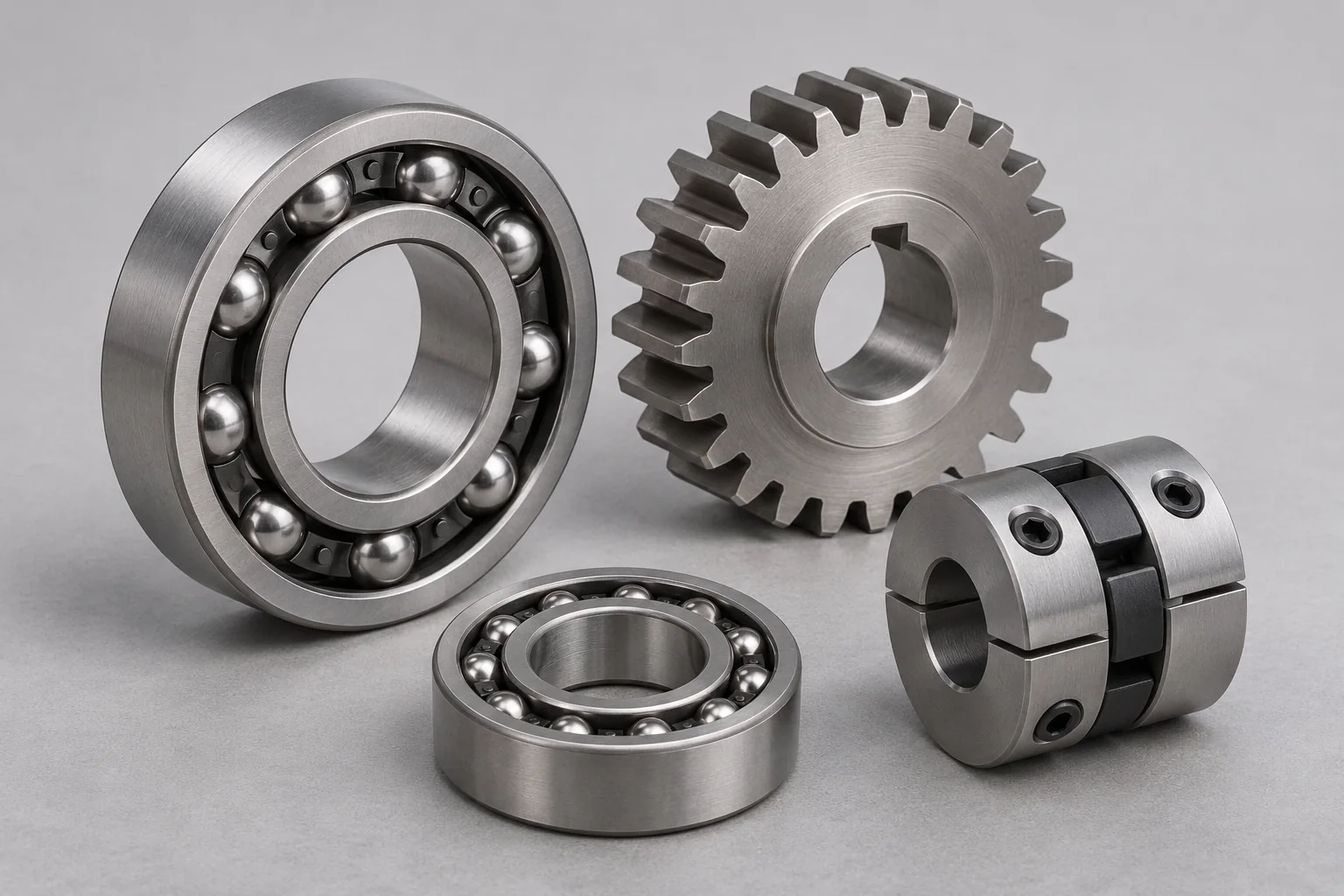
Measure a loose bearing
Measure the bore across the inner ring, the outside diameter across the outer ring, and the width from face to face. Record which ring you measured if their widths differ. Note the bearing type and whether it has seals or shields. Include the complete suffix because it can describe features that do not show up in the three dimensions.
Document a mounted bearing unit
Measure the shaft diameter and mounting hole center distances. Note the housing style, hole count and locking method. For a pillow block, record the distance from the mounting base to the shaft centerline. Say whether you need the insert, housing or complete unit.
Identify a sprocket or coupling
For a sprocket, record chain series or pitch, strand count, tooth count, bore, keyway and hub style. For a coupling, record the series, both shaft bore sizes, keyways and insert style. Photograph the hub and shaft attachment so the supplier can distinguish a plain bore from a bushing style.
Manufacturer reference: SKF bearing selection criteria