Valves & fluid power
How to Measure Valve Ports and Fittings for Replacement
Thread size is only one part of identifying a valve or fitting. Start with the model code and port labels, then use measurements to verify the connection and mounting details against a drawing.
Where to measure
Reference drawings. Verify dimensions on your part or the manufacturer’s drawing.
Male fitting thread diameter and pitch
Tube outside diameter and valve mounting centers
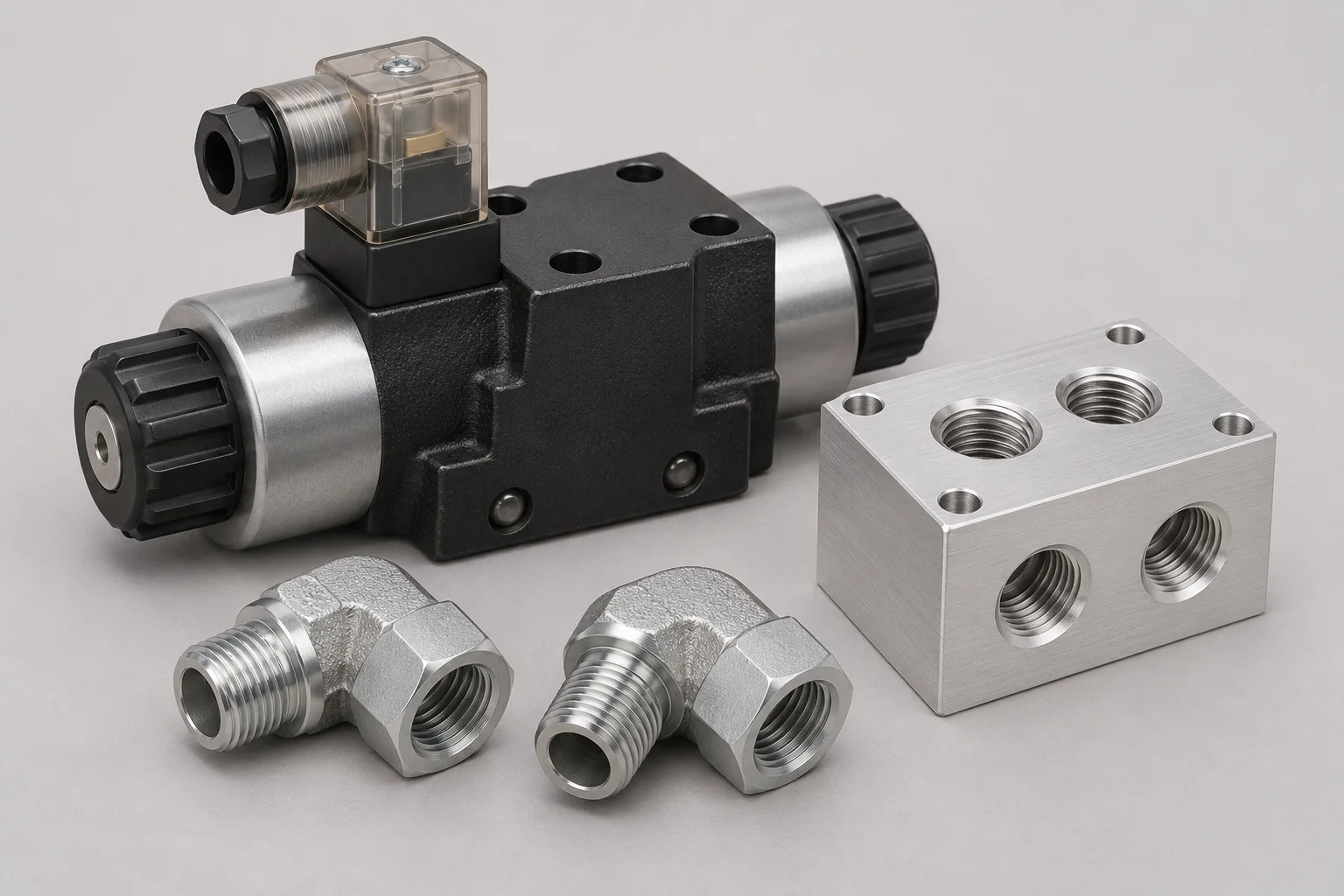
Record the connection dimensions
On a loose fitting, record male or female thread, diameter and pitch. Note whether it appears straight or tapered and whether it seals at an O-ring, a seat or the threads. Check the thread standard against a manufacturer chart because nominal pipe size can differ from the diameter you measure.
Separate tube size from port size
For a push-to-connect fitting, record the tube outside diameter and the threaded port size separately. Note inch or metric units, fitting angle and available space. For a manifold valve, record the mounting hole pattern and the manifold series from the label or drawing.
Confirm valve function and ratings
Include the number of ports and positions, operating medium and pressure rating. For a solenoid valve, record coil voltage, AC or DC, and connector style. Use the full model and manufacturer documentation to confirm these specifications before choosing a replacement.
Manufacturer reference: SMC solenoid valve ordering specifications