Replacement Photoelectric Sensors & Reflectors
Send the full sensor model, wiring label, and a photo of what the sensor faces. That helps us identify whether you need a photoeye, reflector, emitter and receiver pair, or mounting bracket.
Request a quote Browse matching parts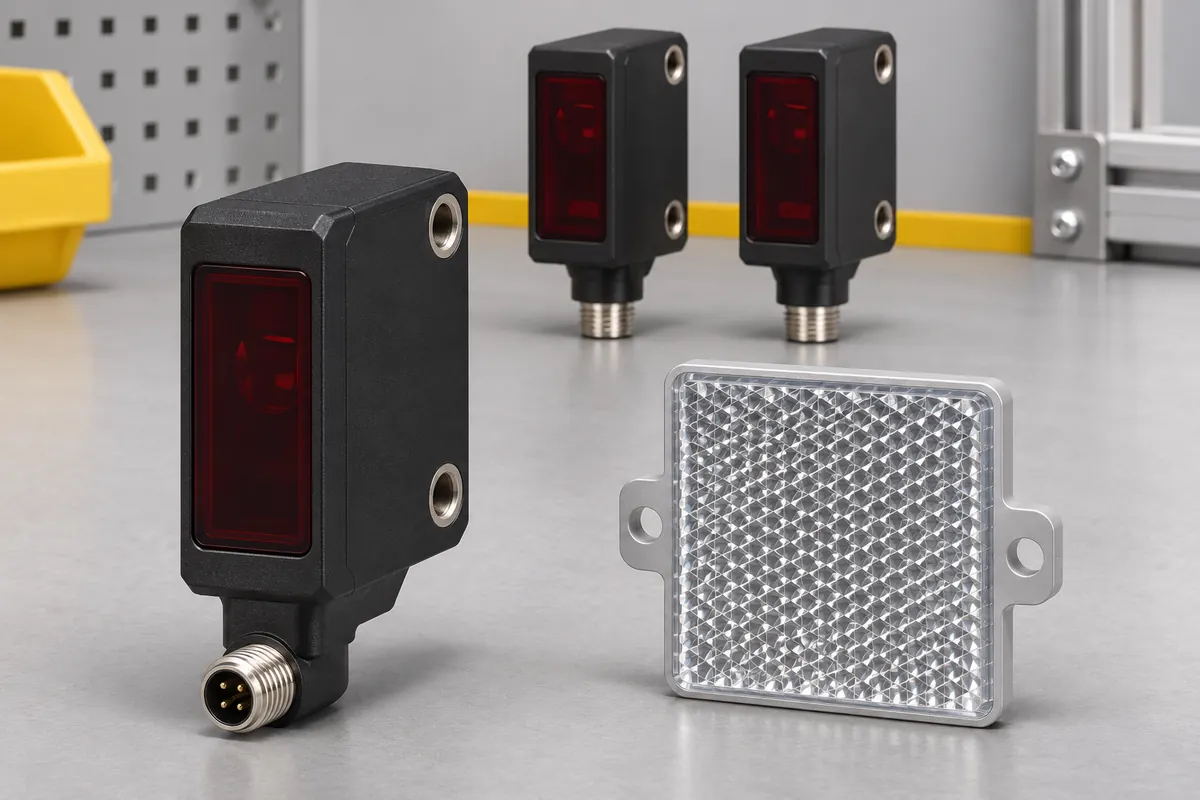
Photoelectric Sensor Not Detecting? Troubleshoot a Photoeye
How to measure a photoelectric sensor
Record the body height, width, depth, and mounting hole centers. Note which face carries the lens and how the connector or cable exits. Measure the installed distance along the beam to the reflector, receiver, or target. Use that measurement and the model data sheet to check the working range.
Where to measure
Reference drawings. Verify dimensions on your part or the manufacturer’s drawing.
Housing and mounting hole centers
Installed distance along the beam
What to include in a photoeye quote
Include the sensing mode, supply voltage, output type such as PNP or NPN, light-on or dark-on behavior, and connector type or cable length. For a through-beam set, send both model numbers. For a retroreflective sensor, include the reflector model or dimensions and note whether the target is clear, glossy, or opaque.
See the proximity sensor measurement guide.
Manufacturer reference SICK photoelectric sensing modes